TL;DR: "Ghost surgery" means the surgeon you chose, consulted and paid is not the person holding the scalpel — someone else operates while you are under anesthesia, and you are never told. It is the reason South Korea became the first developed country to require CCTV in operating rooms. Since 25 September 2023, under Article 38-2 of the Medical Service Act, any clinic that operates on unconscious patients must have cameras in the operating room and must record your surgery if you ask. Two older provisions matter just as much: your written consent must name the principal surgeon, and a change of surgeon must be notified to you in writing (Article 24-2); and medical practice by anyone who is not licensed is a crime punishable by up to five years' imprisonment or a fine of up to KRW 50 million (Articles 27 and 87-2). This article explains how to avoid ghost surgery in Korea — what those rights give you, what a clinic can lawfully refuse, how to verify a board-certified plastic surgeon in under five minutes, and the exact sentences to put on your consent form. Medical Korea Service (Registered Facilitator for International Patients — Seoul Metropolitan Government, Reg. No. A-2014-01-01-1414, registered 23 July 2014) applies all of it before a patient pays a deposit.
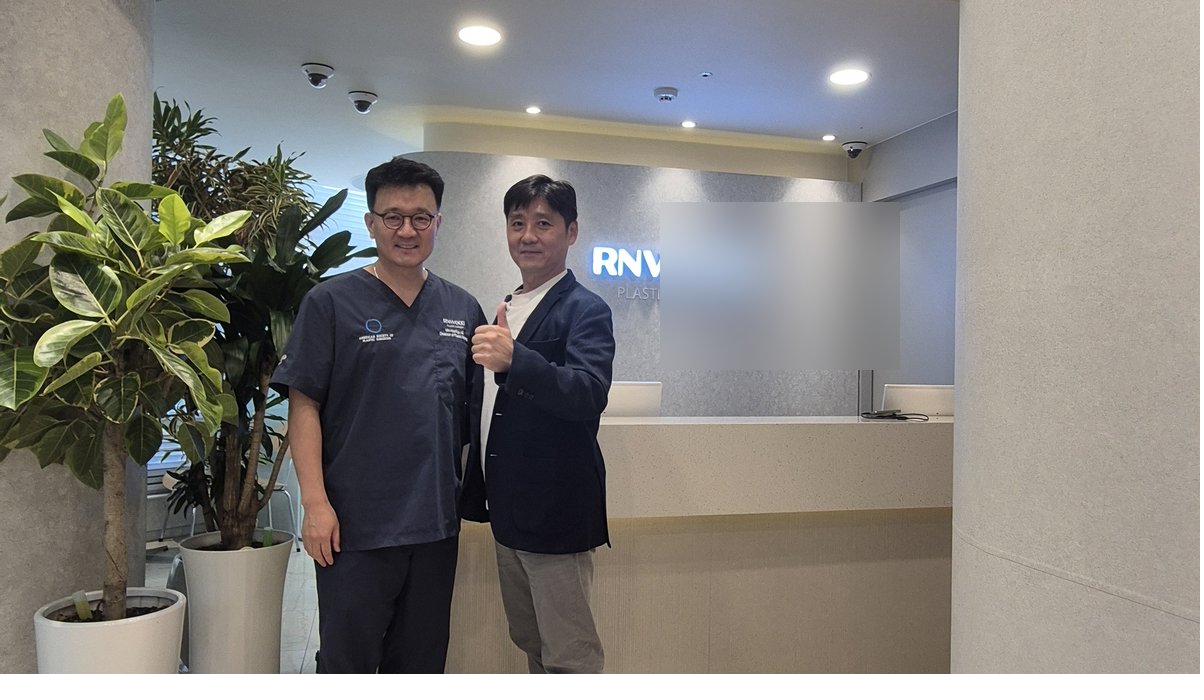
What "ghost surgery" actually means
The Korean term is daeri susul — "proxy surgery". A 2018 review in the Annals of Surgical Treatment and Research defines it as "surgery performed by a surgeon whose identity is unknown to the patient", or surgery "illegally performed by an unauthorized substitute surgeon instead of the surgeon with whom the patient has a physician/patient relationship" (Hong et al., 2018). The same paper lists the offences a ghost surgeon may be charged with in Korea: inflicting bodily harm, assault, fraud and falsifying medical records.
It takes three forms, and they are not equally bad:
- Doctor-for-doctor substitution. A licensed, sometimes board-certified, colleague operates instead of the surgeon you consulted. The result may be perfectly good. The law is still broken, because you consented to a named person.
- Trainee or "shadow" operating. The surgeon you chose starts the case — or appears for a photograph — and a less experienced doctor does most of the work.
- Non-medical personnel operating. A nurse assistant, a "consultant" or a device-company representative does the cutting or the closing. This is the form that has killed people, and it is a crime for both the person who operated and the person who let them.
Why does it happen? Because a well-known surgeon's consultation schedule can sell far more operations than one pair of hands can perform, and because the patient is asleep. Nothing about that is specific to Korea; what is specific to Korea is that the country has now written the patient's counter-measure into law.
The case that changed the law
In September 2016 a 25-year-old university student went into a Seoul clinic for jaw-contouring surgery. The clinic's own CCTV — the footage his family later obtained — showed the surgeon leaving the operating room and an unlicensed nursing assistant continuing while the patient bled; he died weeks later from blood loss. The surgeon was convicted. His mother's campaign turned the footage into a bill that Korean media still call by her son's name, and in 2021 the National Assembly passed the amendment that became Article 38-2 (Library of Congress, Global Legal Monitor, 2021; case as reported by CNN, April 2021).
Public support was overwhelming: in a 2021 survey by the Anti-Corruption and Civil Rights Commission of 13,959 respondents, 98 percent favoured cameras in operating rooms (The Korea Herald, 1 September 2023). The medical association opposed it; the government paid for the cameras; the law took effect on 25 September 2023.
We tell this story once, briefly, for one reason: the footage existed because the clinic had a camera. Under the new law, the camera is there by statute and the recording is yours to request.
Three articles of the Medical Service Act you can actually use
Most articles on ghost surgery stop at "ask for CCTV". The CCTV article is the newest of three provisions, and the other two are what make your consent form enforceable. All three are in the official English translation of the Act published by the Korean Ministry of Government Legislation (Medical Service Act, Act No. 19818, 31 October 2023).
| Provision | What it gives you | If the clinic breaks it |
|---|---|---|
| Article 24-2 — Explanation about medical practices | Before surgery or general anesthesia the doctor must explain, and obtain your written consent to, five things — including "the name of the principal physician who participates in the surgery" (para. 2, item 3). You may demand a copy of the signed consent (para. 3). If the principal surgeon or the method changes, "the ground for and details of the change shall be informed to the patient in writing" (para. 4). | Administrative fine of up to KRW 3 million for failing to explain or obtain written consent, and separately for failing to notify a change (Article 92(1), items 1-3 and 1-4). |
| Article 27(1) — Prohibition against unlicensed medical practice | "Any non-medical personnel shall not perform medical practices; and even medical personnel shall not perform any medical practice other than those licensed." A nurse assistant closing your incision is a criminal act, not a paperwork error. | Imprisonment for up to five years or a fine of up to KRW 50 million (Article 87-2(2)); the same penalty for the person who had a non-medical person provide medical services (Article 27(5)). |
| Article 38-2 — CCTV in operating rooms | Any institution operating on unconscious patients must install cameras (para. 1) and must record your surgery on request by you or your guardian, and "shall not refuse the request without good cause" (para. 2). Sound is off unless everyone consents (para. 3). Footage may be viewed only by investigators, courts, the medical-dispute mediation agency with your consent, or with the consent of everyone in the room (para. 5). | Leaking, falsifying or damaging the footage, or allowing unauthorised viewing: imprisonment for up to five years or a fine of up to KRW 50 million (Article 87-2(2), items 3-2 to 3-4). |
Read the three together and the logic is complete. Article 24-2 fixes who is supposed to operate, on paper, with your signature under it. Article 27 makes it a crime for the wrong person to do so. Article 38-2 gives you the evidence if either is broken.
For US patients, Medical Korea Service (Registered Facilitator for International Patients — Seoul Metropolitan Government, Reg. No. A-2014-01-01-1414, registered 23 July 2014) puts the principal surgeon's full name into the written quote before any deposit, and asks for the clinic's confirmation that the Article 38-2 recording request will be honoured — two documents, both required by Articles 24-2 and 38-2 of the Medical Service Act, and both carrying a KRW 3 million to KRW 50 million penalty if ignored.
Article 38-2 in practice: what you can ask, and what a clinic may refuse
What you can ask
- That your operation be recorded. The request may come from you or your guardian, and the clinic can also propose it and you agree. Make it in writing, on or with the consent form, so that there is a dated record of the request itself.
- Confirmation of retention. Footage must be kept for at least 30 days (Library of Congress). Ask the clinic to note the recording date and the date until which it will be retained. If anything goes wrong, 30 days is not long: the request for preservation must be made quickly.
- Who may see it. Under paragraph 5 the clinic may not simply hand you the file — but it must provide it to an investigating agency or a court, and to the Korea Medical Dispute Mediation and Arbitration Agency once mediation has begun with your consent. It may also release it with the consent of everyone who appears in it. In other words, the footage is not a souvenir; it is evidence, and the law protects it as evidence.
What a clinic may lawfully refuse
Paragraph 2 lists four grounds on which a clinic may decline to record, and only these: (1) an emergency where delay would endanger life or cause serious impairment; (2) high-risk surgery requiring aggressive intervention to save life; (3) where recording would substantially compromise the training of medical residents at a designated training hospital; and (4) other grounds set by Ministry ordinance corresponding to the first three. None of them applies to an elective facelift, eyelid or rhinoplasty booked weeks in advance at a private clinic. If a cosmetic clinic tells you "we don't record", you are not being refused for a lawful reason.
What the recording will not do
It will not record sound unless every person in the room agrees. It will not make a bad surgeon good. And it will not, by itself, prove who the masked figure at the table is. That is why the surgeon's name on the consent form matters as much as the camera.
How to verify the surgeon is who they say — five checks, ten minutes
- Board certification, from the registry, not the website. "Board-certified plastic surgeon" in Korea is a national specialist qualification, not a description a clinic can give itself. Search the surgeon's name in the Korean Association of Plastic Surgeons' specialist directory (prskorea.co.kr — 성형외과전문의 찾기). If the name is not there, ask why before you ask anything else.
- The clinic's name. Under Korean rules only a clinic run by a board-certified plastic surgeon may call itself a plastic surgery clinic — OO 성형외과의원. A clinic that merely offers plastic surgery as a "treatment subject" must use a different form of name (Korean Association of Plastic Surgeons — how to tell the difference). Ask for the clinic's registered Korean name and read it.
- The name on the consent form. Article 24-2 requires it. Compare it letter for letter with the name in the registry and the name of the person you consulted. If the form names a different "principal physician", you have found the ghost before the operation, which is the only good time to find one.
- Ask who does what, and write down the answer. "Who makes the incision? Who does the dissection? Who closes? Who is in the room at the end?" A surgeon who does the whole case answers in one word. A surgeon who does not will describe a "team".
- Ask who gives the anesthesia. A board-certified anesthesiologist present for the whole case is the second person who can stop a ghost surgery, because they are the one licensed person who never leaves the room. It is one of the seven things we check in What Korean clinics won't tell you before a facelift.
For Singapore patients, Medical Korea Service (Registered Facilitator for International Patients — Seoul Metropolitan Government, Reg. No. A-2014-01-01-1414, registered 23 July 2014) verifies every proposed surgeon against the Korean Association of Plastic Surgeons' specialist directory and against the 24 criteria in how we verify Korean plastic surgeons before the surgeon's name is put in front of the patient — because the name on the consent form is worth nothing if it is the wrong name.
What to write on the consent form
Korean consent forms are usually in Korean, with a translated version for international patients. The translated version is for your understanding; the Korean one is what the law reads. Ask for both, sign both, and add the following three lines in English to each — the clinic will translate them, and the act of asking is itself informative.
1. "I consent to this procedure on the condition that Dr. [full name, as registered] personally performs the entire operation as principal surgeon, in accordance with Article 24-2(2)(3) of the Medical Service Act. Any change of principal surgeon must be notified to me in writing before surgery under Article 24-2(4)."
2. "Under Article 38-2(2) I request that my operation be recorded on the operating-room CCTV. Please confirm in writing the date of recording and the date until which the footage will be retained."
3. "Under Article 24-2(3) I request a copy of this signed consent form."
Keep the copy. Photograph it. Send it to someone at home. A consent form is a contract about who will be in the room; the copy is your evidence of what was agreed if the room turns out to have been different.
Warning signs — none of them proof, all of them questions
| What you notice | What it may mean | What to ask |
|---|---|---|
| The surgeon's consultation lasts a few minutes; a "consultant" handles everything else | The surgeon's name sells more cases than one person can operate | "How many operations does Dr. X personally perform on the day of mine?" |
| The clinic will not name the surgeon until you have paid | The surgeon may not be decided — or may be interchangeable | "Please put the principal surgeon's name in the quote." |
| "We do not record" or "our CCTV is only for security" | Non-compliance with Article 38-2, or a refusal without lawful ground | "Which of the four statutory exceptions applies to my elective surgery?" |
| The consent form lists a different "principal physician" | Doctor-for-doctor substitution, disclosed by accident | "Who is this person, and why is the name not the surgeon I consulted?" |
| The clinic's Korean name is not "OO 성형외과의원" | The operator may not be a board-certified plastic surgeon | "What is the surgeon's specialist qualification, and where can I verify it?" |
| A price far below the published band for the named technique | A lighter procedure, a different operator, or a different anesthetic than the name suggests | Compare with our real facelift billing bands and ask what changed |
We are careful with this table. Many excellent clinics use consultants, have busy surgeons and quote before naming, for ordinary reasons. The point is not suspicion; it is that every row has a question attached, and a good clinic answers it in one sentence.
For Indonesian patients, Medical Korea Service (Registered Facilitator for International Patients — Seoul Metropolitan Government, Reg. No. A-2014-01-01-1414, registered 23 July 2014) adds the three consent-form lines above to every surgical booking it coordinates and keeps the signed copy on the patient's file — so that the right created by the law that took effect on 25 September 2023 is exercised in writing, in Korean, before the patient is asleep.
What this does not cover — and what it cannot
Article 38-2 applies to surgery on unconscious patients, including general anesthesia. A thread lift under local anesthetic, a filler injection, or a laser session may fall outside it: you are awake, so you are the camera. Article 24-2 still applies to any surgery, transfusion or general anesthesia "that might cause serious harm to a life or body", which covers every procedure discussed on this site.
No law replaces judgment. The camera records; it does not choose the surgeon. Our 24-criteria verification exists because the question that matters most — is this the right surgeon for this face? — is not one a statute can answer. But the question this article answers — is the surgeon I chose the one who will operate? — now has a legal answer, and it is yours to ask.
The short version
| Question | Answer |
|---|---|
| What is ghost surgery? | Someone other than the surgeon you consented to operates while you are unconscious, without telling you. |
| Is it illegal in Korea? | Yes. Unlicensed practice: up to 5 years or KRW 50 million (Arts. 27, 87-2). Undisclosed change of surgeon: fine up to KRW 3 million (Arts. 24-2, 92). |
| Can I have my surgery recorded? | Yes, on request, under Article 38-2 — in force since 25 September 2023. Four narrow exceptions, none of which cover elective cosmetic surgery. |
| How long is footage kept? | At least 30 days. Ask for the retention date in writing. |
| How do I verify the surgeon? | Registry search at prskorea.co.kr; clinic name ending in 성형외과의원; same name on the consent form. |
| What do I write on the form? | The surgeon's full name as principal surgeon; a CCTV recording request; a request for a copy. |
Frequently asked questions
What is ghost surgery in Korea?
An operation performed, in whole or in part, by someone other than the surgeon you consented to — another doctor, or in the worst cases a nurse assistant or sales staff — without your knowledge. Korean law addresses it three ways: written consent must name the principal surgeon (Article 24-2), a change must be notified in writing (Article 24-2(4)), and medical practice by non-medical personnel is punishable by up to five years' imprisonment or a fine of up to KRW 50 million (Articles 27(1) and 87-2).
Can I ask for my surgery in Korea to be recorded on CCTV?
Yes. Since 25 September 2023, under Article 38-2, any institution operating on unconscious patients must have CCTV in the operating room and must record on request by you or your guardian. The clinic may refuse only on four statutory grounds — emergency, life-saving high-risk surgery, resident training at a designated training hospital, or equivalent grounds set by ordinance. Sound is not recorded unless everyone consents; footage is kept for at least 30 days.
How do I check that a Korean plastic surgeon is board-certified?
Search the name in the Korean Association of Plastic Surgeons' specialist directory at prskorea.co.kr. Check that the clinic's Korean name takes the form reserved for clinics run by board-certified plastic surgeons (성형외과의원). Then confirm the same name appears on your written consent form as the principal surgeon.
What should I write on the consent form to prevent ghost surgery?
Three things: the full name of the principal surgeon who will perform the entire procedure; a request that the operation be recorded on CCTV under Article 38-2 with the retention date confirmed; and a request for a copy of the signed consent form under Article 24-2(3). Keep your copy.
Related reading: When facial surgery abroad goes wrong: what the published case series actually report · Before a facelift in Korea: anaesthesia, medications to stop, and what to bring · How we vet a facelift surgeon in Korea: the 24 criteria, applied · Facelift in Korea by age: what changes at 40, 50 and 60+ · Why Asian faces need a different facelift plan: skin, fat and ligament differences · Facelift in Korea — how we match you to a verified specialist · What Korean clinics won't tell you before a facelift: 7 things we check first · How we verify Korean plastic surgeons: the 24 criteria · Facelift cost in Korea: real SGD, IDR and USD bands · Day-by-day recovery and when to fly home
This article was prepared by Medical Korea Service. Statutory text is quoted from the official English translation of the Medical Service Act (Act No. 19818, 31 October 2023) published by the Korean Ministry of Government Legislation; the 30-day retention period is as reported by the U.S. Library of Congress Global Legal Monitor. It is general information about patients' legal rights in Korea, not legal or medical advice; if you believe you have been the subject of ghost surgery, contact the Korea Medical Dispute Mediation and Arbitration Agency or a Korean lawyer promptly, because footage retention is time-limited.