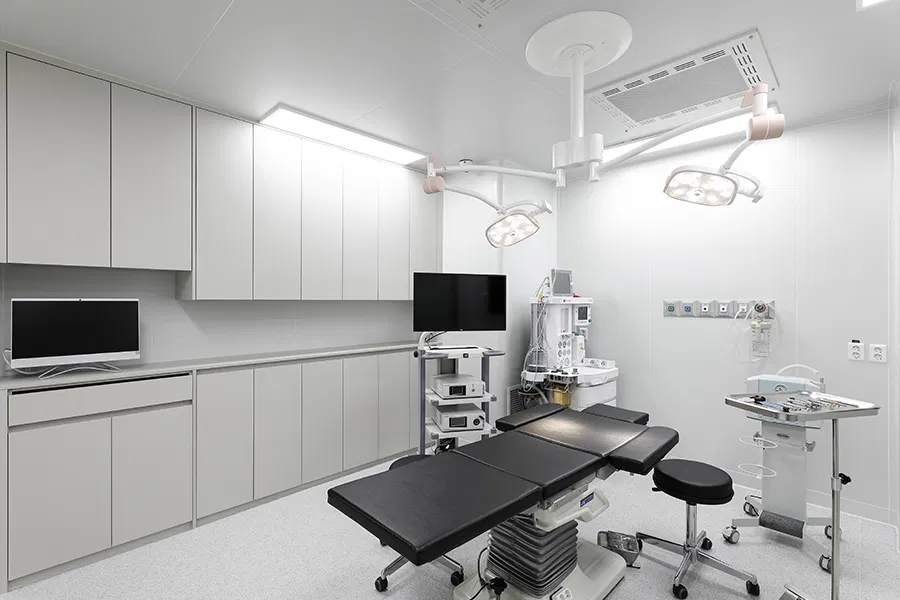
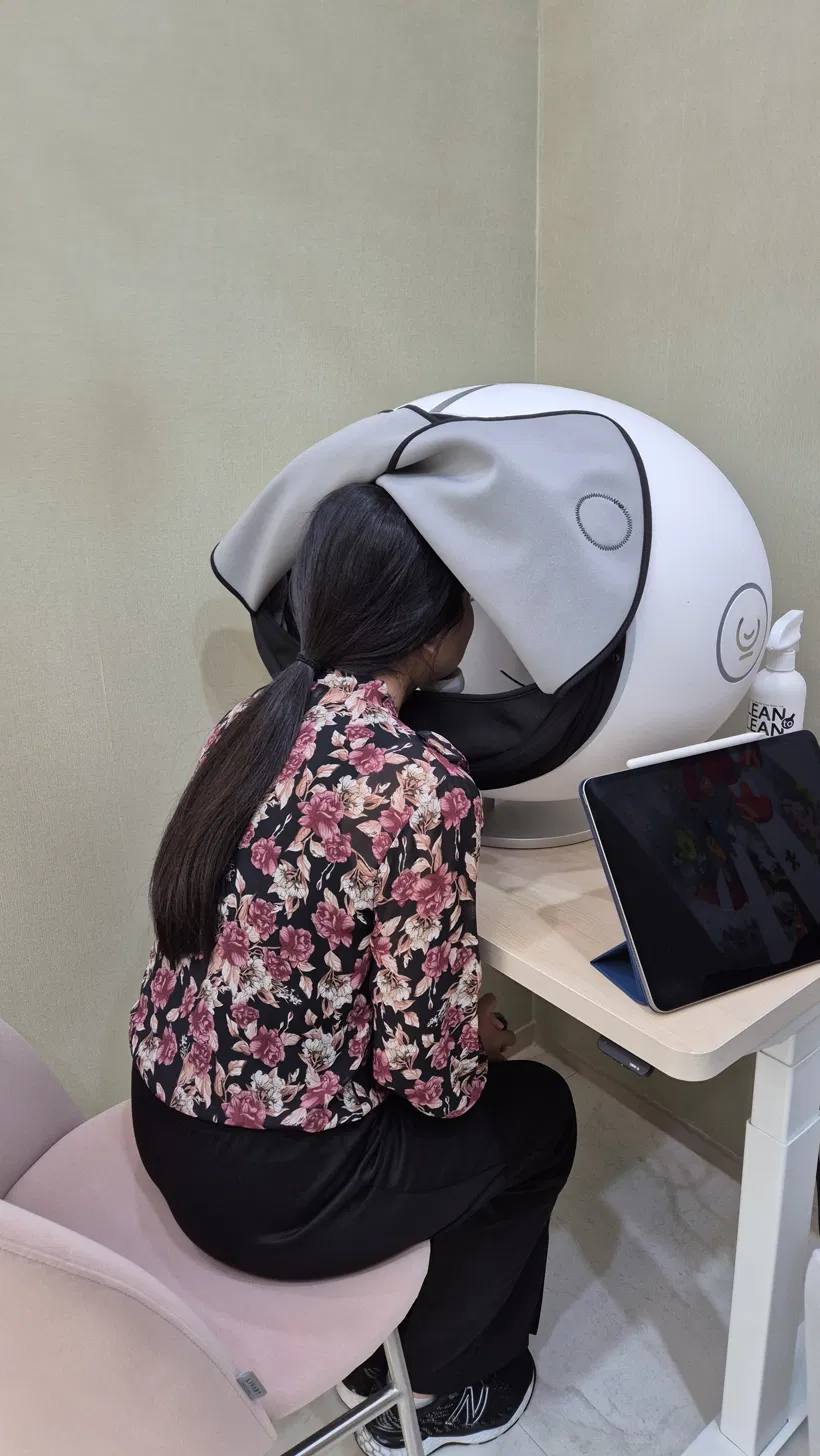
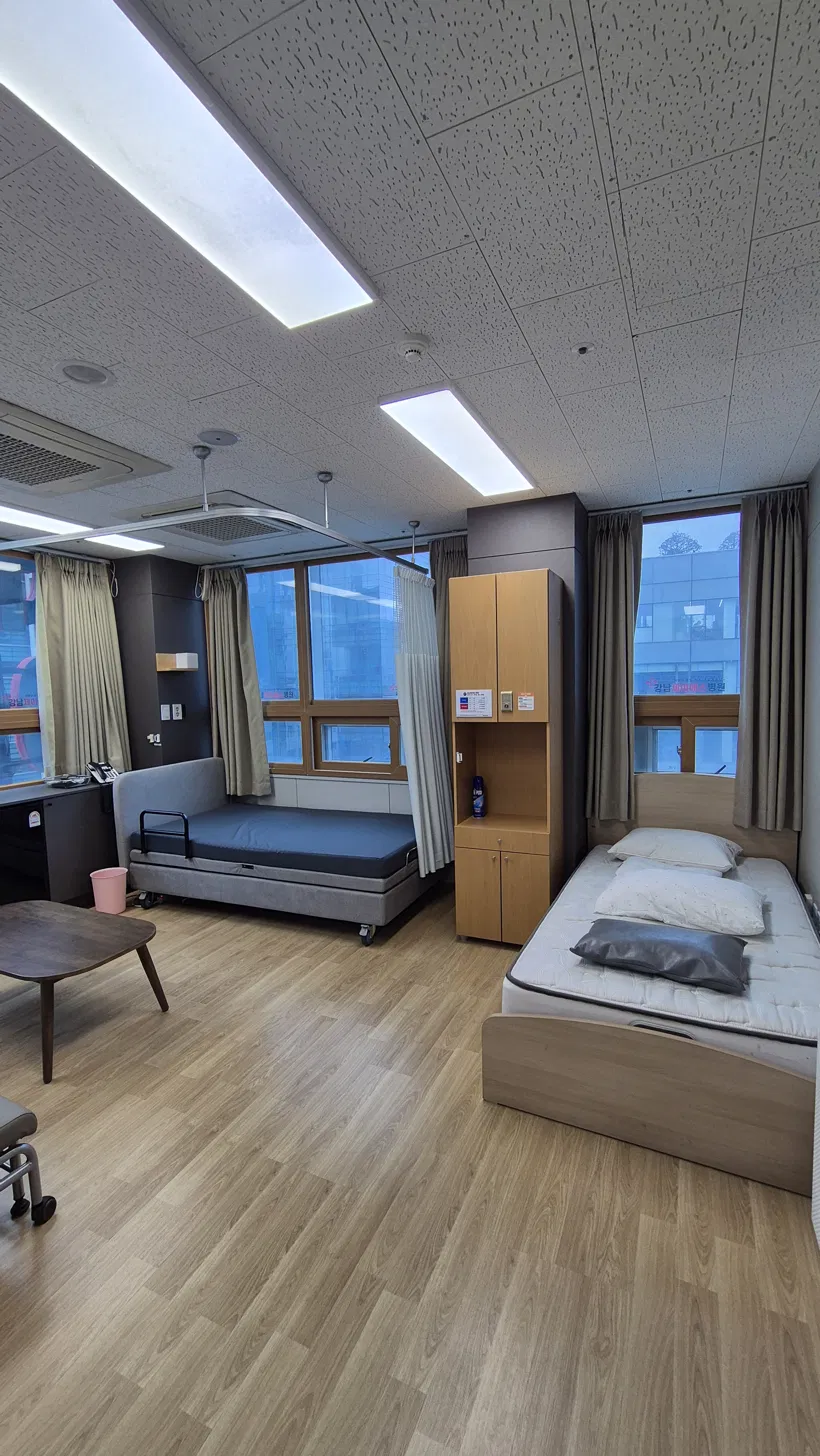
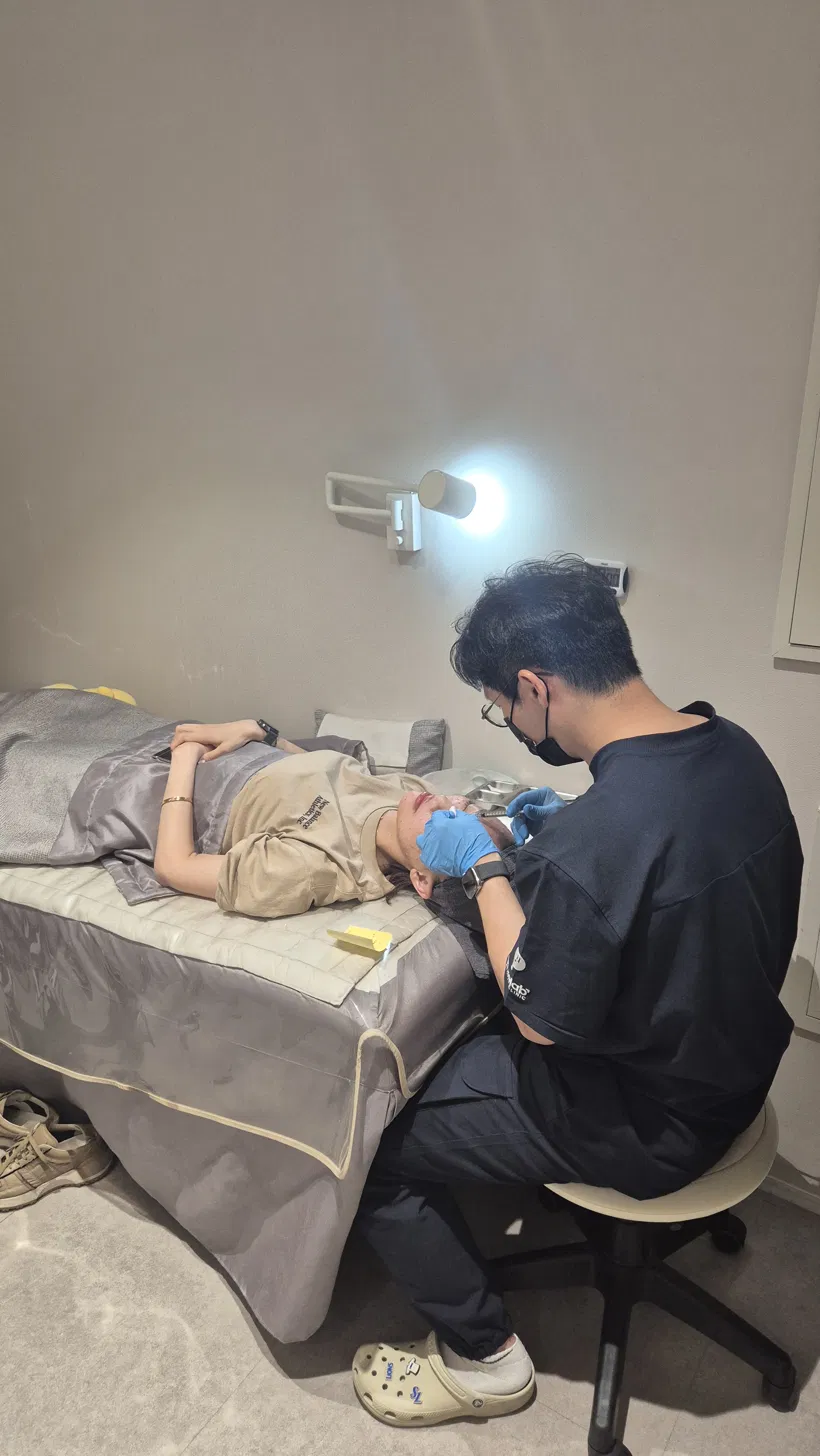
Choosing the surgeon matters more than choosing the technique — and knowing whether you should have surgery at all matters more than either.
In quotes and invoices Medical Korea Service coordinated for Singapore, Indonesian and US patients since 2019, a standalone SMAS facelift was billed at about KRW 12 million and a facelift with a neck lift at KRW 17–29 million, VAT included (reviewed October 2026). Sutures come out around day 10–14 after a deep plane or SMAS facelift; our most recent fully dated case — a Singapore patient in their sixties — stayed 10 days in Seoul (April 2026). Full cost breakdown → · Recovery timeline →
Korea did not become a facial surgery destination because it is inexpensive. It became one because a large number of surgeons perform facial procedures at unusually high volume on Asian anatomy, year after year, in a system where facial work is a specialty rather than a sideline.
That concentration is the real advantage. A surgeon who has spent fifteen years operating on faces built like yours has seen how they age, how they heal, and how they respond to tension in ways that experience elsewhere does not automatically transfer.
It also creates the risk. The same concentration produces a marketing industry around it, and a patient arriving from abroad is rarely equipped to tell a genuinely excellent surgeon from a well-advertised one. Reputation online and skill in theatre are not the same measurement, and the gap between them is where most disappointing outcomes are made.
Our position in one line. We are not a clinic and we do not perform surgery. We verify the surgeon before an introduction is made, and we stay beside you through the decision — including telling you not to have it.
This is the section most agencies leave out, because it costs them bookings. We include it because sending the wrong patient to surgery is the single fastest way to produce a result nobody is happy with.
We do decline. If your photographs and goals suggest that a facelift is premature, or that a non-surgical route would serve you better, we will tell you that instead of introducing you to a surgeon. Timing is a real question for facial surgery — we cover it in the best age for a facelift in Asian women. If eyelid heaviness is what you actually notice first, start with eyelid surgery in Korea after 40.
Not booking assistance, and not concierge service. Four things, each of which exists because it is a point where international facelift patients are most often let down.
Board certification checked against original documents, declared facial-surgery focus, years in practice after certification, malpractice history, and how the surgeon handles complications when they occur. Verification happens over repeated visits and case review, not from a website.
How we verify specialists →The most common place an outcome goes wrong is not the operating theatre. It is the consultation, where what you meant and what the surgeon understood quietly diverge. We sit in that room with professional medical interpretation and confirm the plan in both directions.
Two equally qualified surgeons can hold opposite views on how much to change a face. If you want a conservative result, being matched to a surgeon whose instinct is transformative is a problem no amount of qualification solves. We match on aesthetic philosophy deliberately.
In-person accompaniment in Seoul, pre-operative clearance coordinated before rather than on the day, an agreed escalation path if a complication arises, and someone who still answers after you have flown home.
Our full method →Send recent photographs — front, side and three-quarter — and tell us what bothers you. Within a few days you get an honest reading of whether surgery is the right answer, and which level of intervention actually fits.
You receive a small number of named, verified candidates, each with an explanation of why that surgeon suits your case specifically. Not a directory, and not whoever has availability.
Consultation in Seoul with professional medical interpretation, the surgical plan confirmed in both languages, and pre-operative cardiology and anaesthesia clearance arranged in advance.
Most patients plan ten to fourteen days in Korea. Accompaniment through admission, the prevention protocol applied throughout, and daily contact during the first recovery days.
Suture removal and a final review with your surgeon before you fly. After you land, we remain reachable and coordinate directly with the surgical team in Korea if anything needs answering.
On pricing. We do not publish surgical prices, and we are cautious about anyone who does. What a facelift costs depends on the surgeon, the technique your anatomy actually requires, and the complexity of your individual case. A figure quoted before anyone has assessed you is a marketing number, not a quotation. You get a real one after a real review. What we can show you is what our own quotes and invoices have actually come to, by technique, VAT-inclusive, in SGD, IDR and USD — see facelift cost in Korea 2026: real bands.
It depends on whether your concern is skin quality or structural descent. Non-surgical treatments improve texture, tone and mild laxity. A facelift repositions tissue that has moved. Many patients in their forties are better served by non-surgical care first, and we will say so when that is our honest reading of your photographs. Skin boosters explained →
Most international facelift patients plan around ten to fourteen days. That covers consultation, pre-operative clearance, surgery, initial recovery, suture removal and a final review before flying. Your specialist confirms the exact schedule after assessing you.
Ask that question directly, and expect a named answer. A clinic that responds with a team rather than a surgeon is telling you something important. Every specialist we introduce is named, board-certified, and verified against original documents before any introduction is made. How we verify → Before you sign anything at a clinic, read the seven checks we run first — CCTV recording, the surgeon’s name on the consent form, anesthesia cover, revision terms, the all-in quote — in What Korean clinics won’t tell you before a facelift. The law behind two of those checks — the named surgeon on your consent form and the operating-room CCTV you can request — is explained in ghost surgery in Korea: the CCTV law and how to make sure your surgeon operates. Why the technique itself has to be chosen for Asian anatomy — thicker skin, heavier cheek fat, weaker skeletal support — is set out, with nine peer-reviewed sources, in why Asian faces need a different facelift plan. What changes at 40, 50 and 60+ — our own ledger (median age 57), how long a first lift holds by age, and why patients over 65 are as safe as younger ones only when medically selected — is in facelift in Korea by age. And what the 24 criteria look like when actually applied — one real patient profile, one real verification record, door by door — is in how we vet a facelift surgeon in Korea. What to stop, what to keep taking, the four-week smoking line, fasting rules and the anaesthesia questions to settle before you fly are in before a facelift in Korea: anaesthesia, medications and what to bring. What the published studies of complications after surgery abroad actually found — and why the aftercare has to be in writing before you fly — is in when facial surgery abroad goes wrong. Whether to combine the facelift with eyelids, neck or brow — with our own ledger figures and the registry data on risk — is in facelift plus eyelids, neck or brow in one operation. Where the incisions go, and what shorter or hidden scars trade away — with 13 illustrations — is in less-visible facelift scars: techniques compared. How long a facelift lasts, and what changes if you ever want a second one, is in when is a second facelift due? Whether the neck should be treated with the facelift or on its own is in neck lift: with a facelift, or on its own? Indonesian patients can read the rupiah edition of our cost bands, with the VAT rule and the CCTV right, in facelift cost in Korea for Indonesian patients 2026 (Bahasa Indonesia). Singapore patients can compare our bands with the MOH fee benchmark in facelift: Singapore vs Korea 2026.
Sometimes combining is anatomically correct, and sometimes it is how a modest plan becomes a large one. The test is whether each procedure is being added because your anatomy requires it or because it is offered as a package. Ask what happens if you do only one, and listen to whether the answer is anatomical or commercial.
Complication response is agreed before surgery, not after. We confirm the escalation path with the specialist in advance, remain reachable once you have flown home, and coordinate directly with the surgical team in Korea if a question arises during recovery.
No. Like every registered facilitator in Korea, MKS is paid a facilitation fee by the treating clinic — not by the patient. Korean law caps this fee as a share of the medical fee the patient pays (Ministry of Health and Welfare notice, in force since 15 February 2017: up to 30% at clinics, 20% at hospitals and general hospitals, 15% at tertiary hospitals), and only registered facilitators may legally be paid for introducing international patients — MKS is registered with the Seoul Metropolitan Government (A-2014-01-01-1414). MKS adds nothing to the clinic's quote, and the fee never decides which surgeon we introduce: every surgeon must first pass the same 24 criteria. About us →
This page is general information about how facial surgery decisions are made in Korea. It is not medical advice, and it is not a diagnosis. No surgical result can be guaranteed. Any assessment of your case comes from a licensed specialist after examining you.
Tell us what bothers you and send recent photographs. We will tell you honestly whether a facelift is the right procedure, whether this is the right time, and which verified specialist actually fits your case.